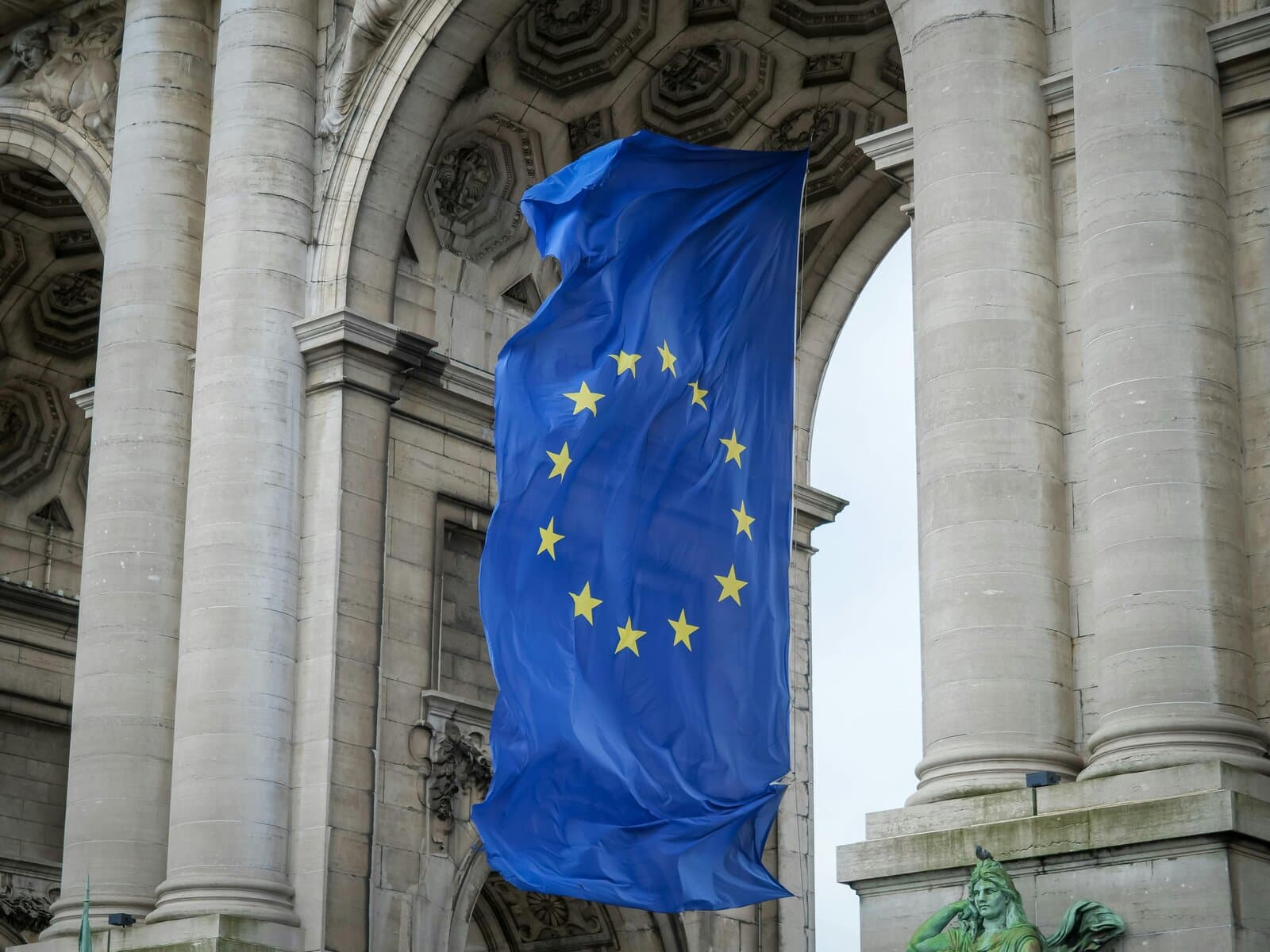

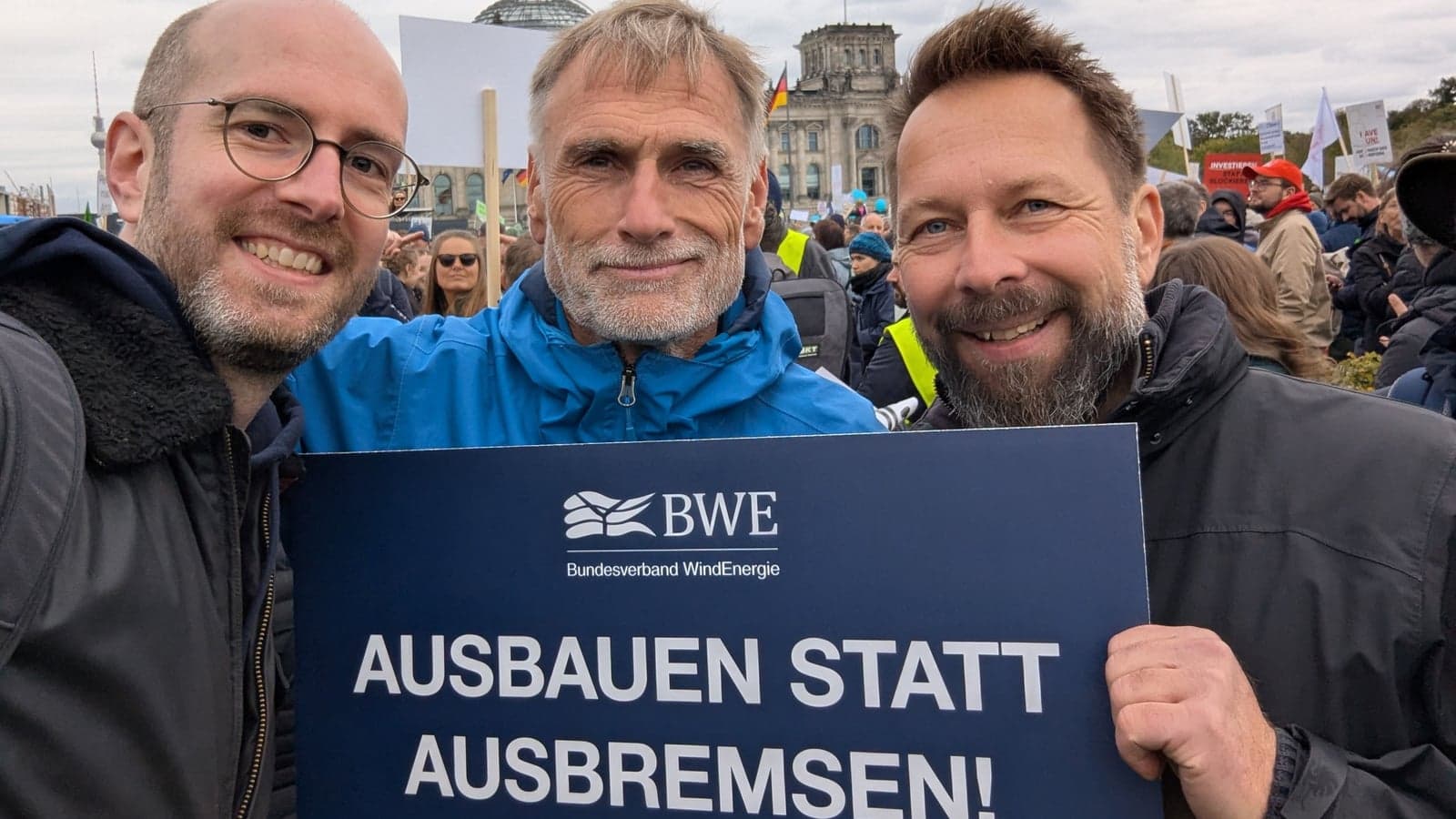
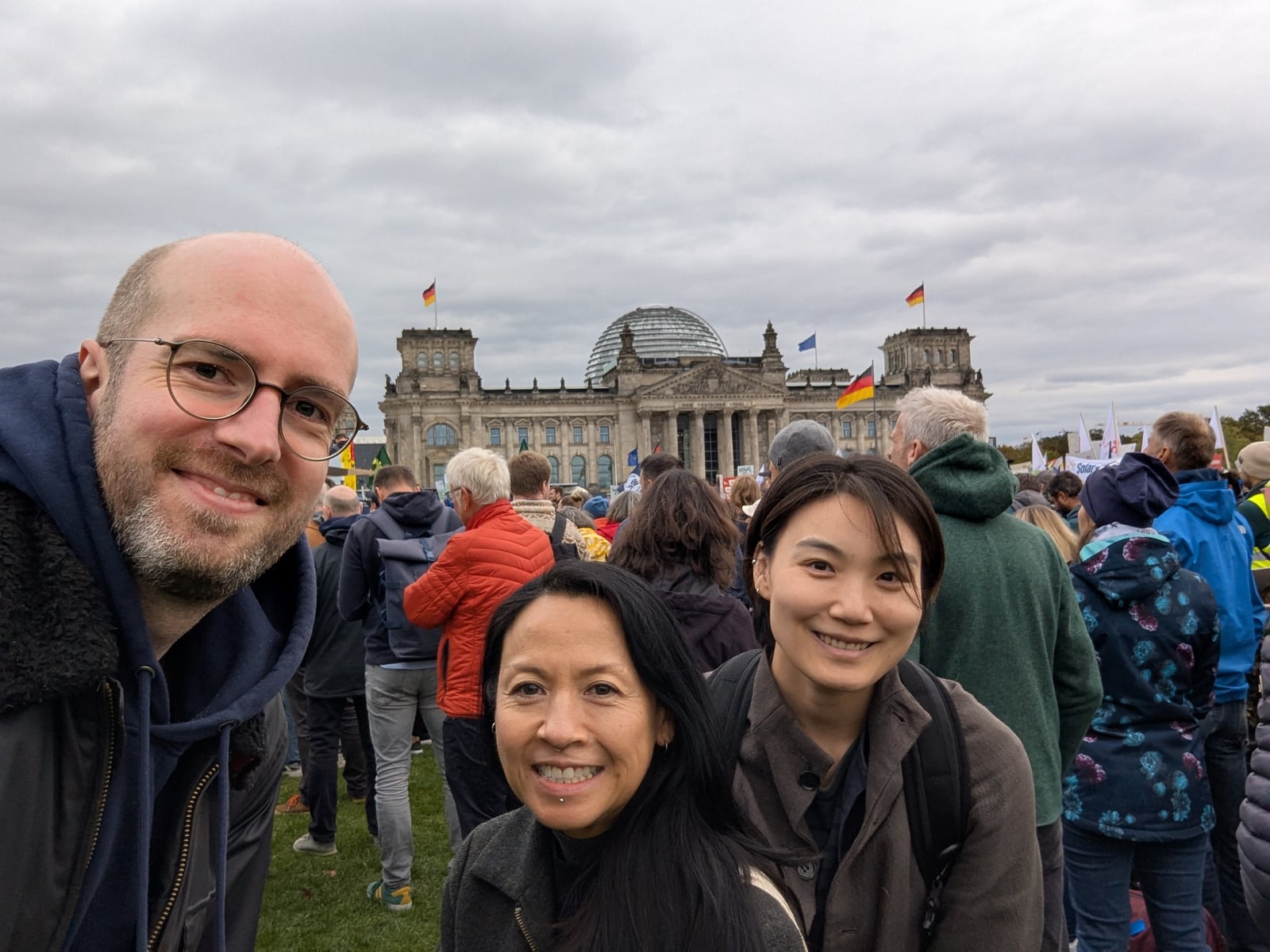
On Friday, 9 October, around 8,000 people gathered on the Reichstagswiese in Berlin, according to the organisers. The German Renewable Energy Federation (BEE), Campact and an alliance of some 300 supporters from industry, trade unions, environmental groups and local government called the demonstration under the motto "Erneuerbare Energien: Ausbauen statt Ausbremsen!" – expand, don't brake. We were there too.
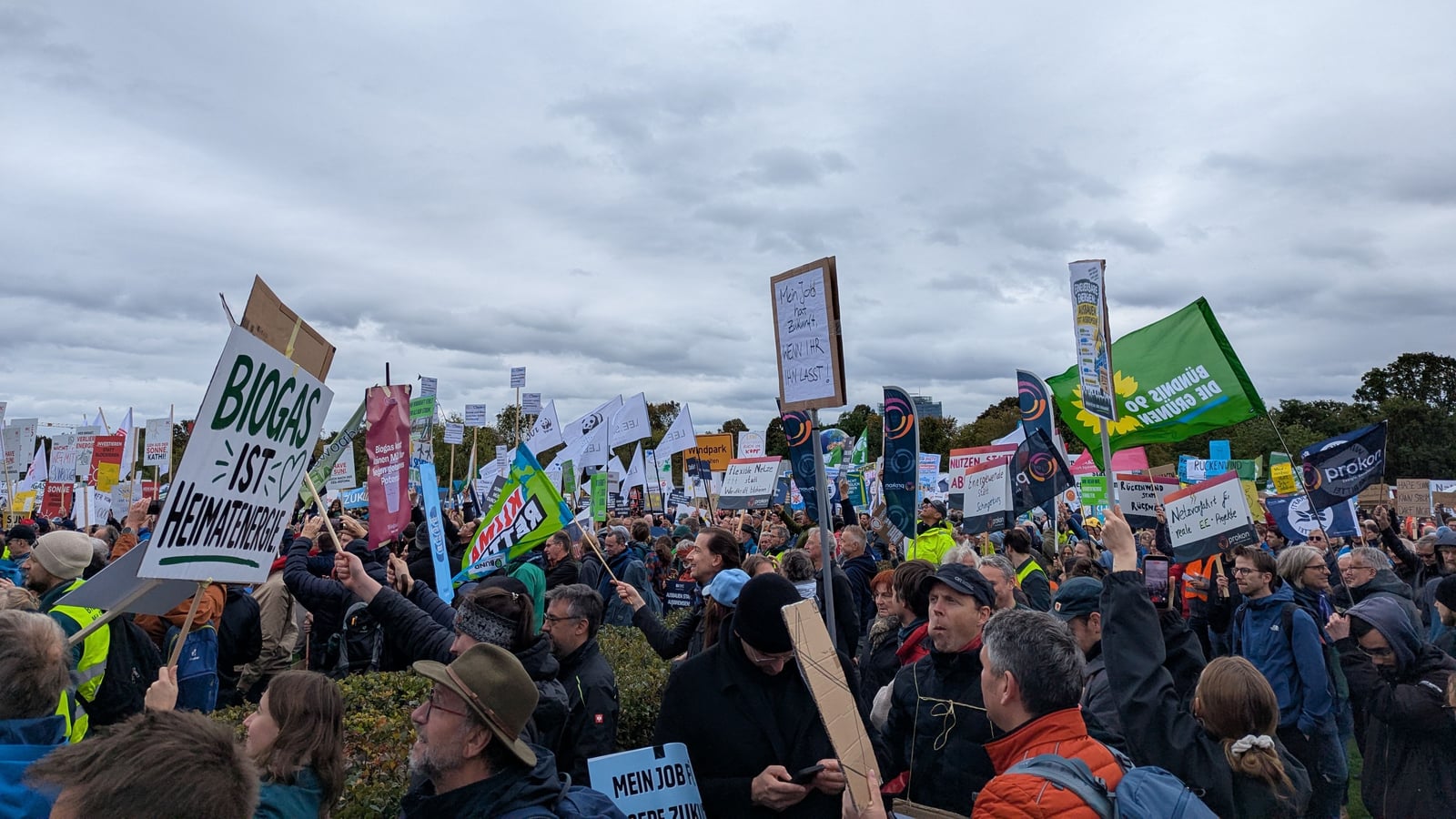
The target was the draft amendment to the Renewable Energy Sources Act (EEG) and the grid connection package that the Bundestag is currently negotiating. The alliance argues that both drafts create investment risk for an industry with more than 436,000 jobs, at exactly the moment when Germany can least afford it.
The timing matters. The war with Iran and the uncertainty around the Strait of Hormuz have once again shown how much Europe's energy supply still depends on geopolitics. Or as Henning Kruse of Kruse Milch & Energie put it in Berlin: "Our energy supply should not depend on what is decided somewhere else in the world."
The demands go beyond subsidies
Much of the coverage focuses on feed-in tariffs for rooftop solar. But the alliance's four demands describe something larger, a resilient energy system:
- A legal framework that secures planning certainty, investment incentives and the economic viability of renewables.
- An expansion push for distribution grids, storage and the digitalisation of the energy system.
- European independence through a domestic manufacturing industry, protected from unfair competition.
- A lower electricity tax for everyone, so that e-cars, rail and heat pumps become more attractive.
Two of the four are about independence and digital infrastructure. That is where our industry needs to pay attention.
Why electrification is an energy security question
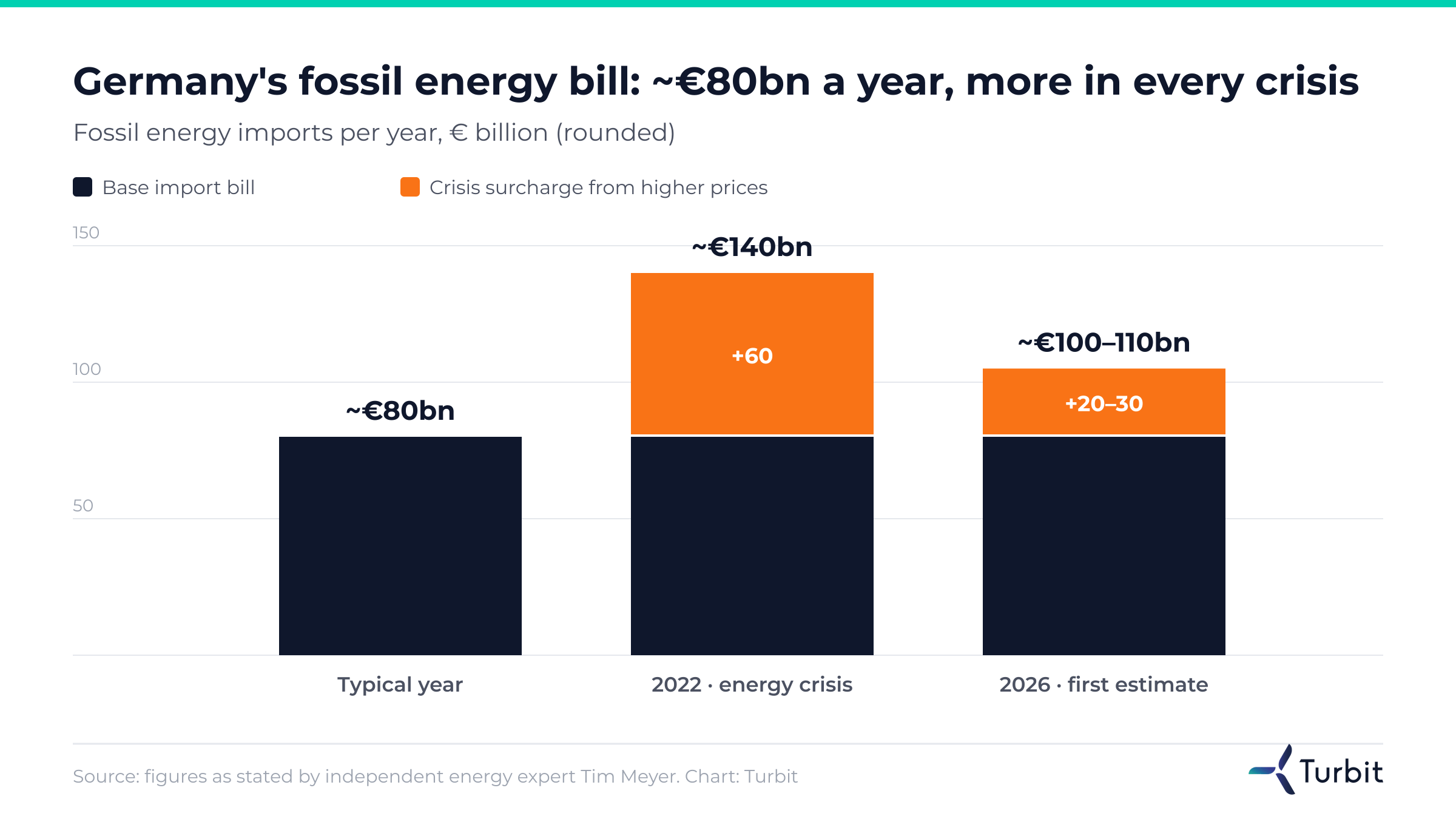
Germany still gets about two thirds of its energy from oil and gas. Independent energy expert Tim Meyer puts Germany's fossil energy imports at around €80 billion a year. In the 2022 crisis, another €60 billion came on top, and first estimates for this year point to an extra €20–30 billion. "That money is simply gone," Meyer says.
Electricity is not insulated from this yet either. Gas power plants often set the German wholesale price, so electricity prices largely follow gas. That is why the alliance's argument holds: replacing expensive fossil gas with renewables lowers electricity prices for everyone.
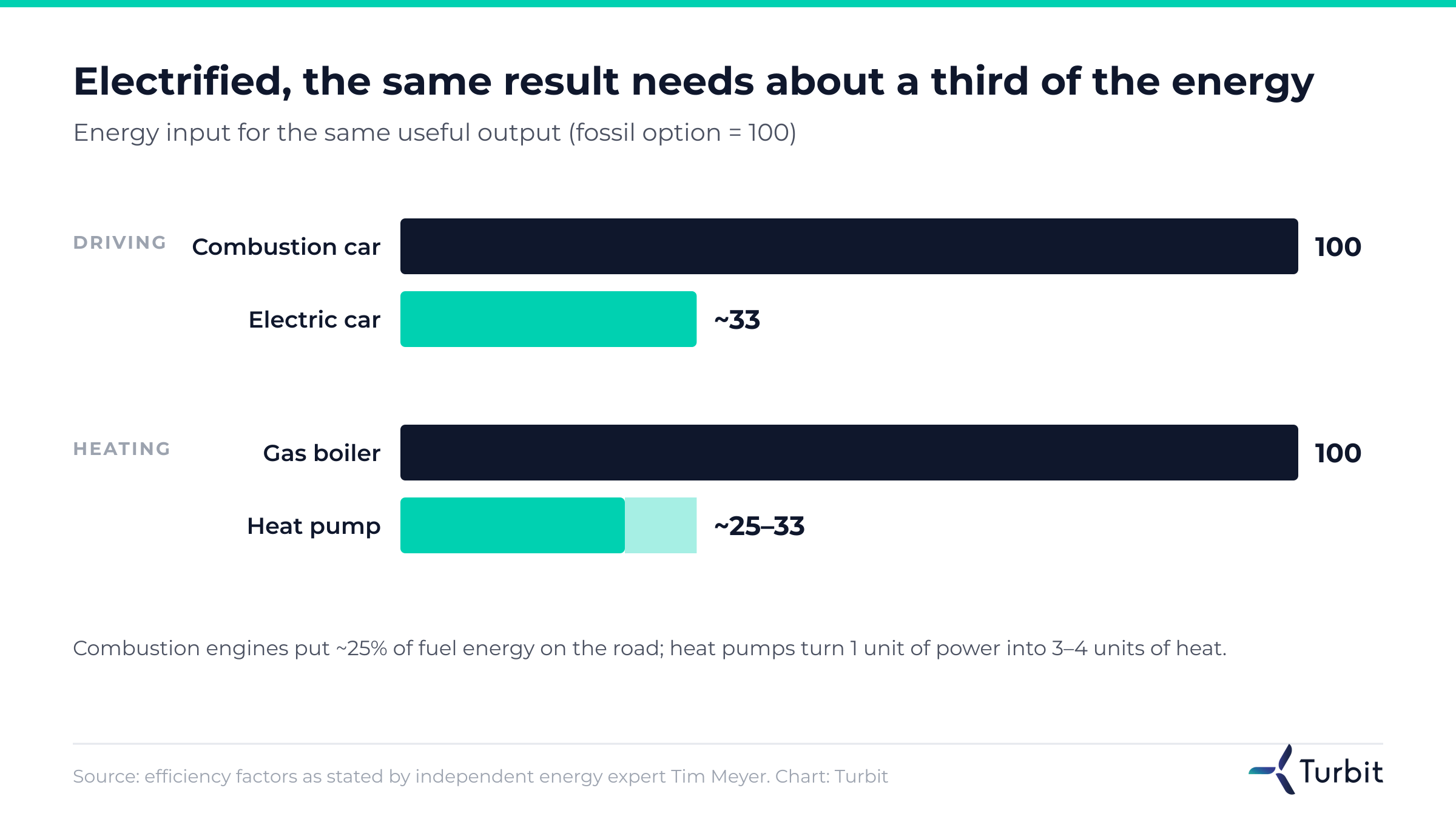
The usual objection is the size of the job. But the energy statistics overstate it. They count what goes in, and most of that is burned with heavy losses. A combustion car puts only about 25% of its fuel's energy on the road. An electric drive is roughly three times as efficient, and a heat pump turns one unit of electricity into three to four units of heat. Once we electrify, we need around a factor of three less energy than the headline numbers suggest.
Installed capacity is sovereign capacity
You could argue that building out wind, solar and batteries only swaps one import dependency for another. Meyer points out the fundamental difference:
"A solar module that is installed in Germany is there. It cannot be cut off. [...] The wind turbines keep turning, the solar plants keep running."
A barrel of oil has to be bought again every day. A wind turbine is bought once and then delivers for 20 to 30 years, and nobody can blockade it. The component supply chain is a real dependency, which is why the alliance calls for a European manufacturing base. But the installed fleet is sovereign capacity.
There is one condition, and it is the one we work on every day: the turbine has to keep running. Every hour a turbine stands still because of an undetected bearing failure, a gearbox issue or a slow drop in performance, a piece of that independence is lost and has to be bought back as gas-fired power at a price set by geopolitics. Expansion is the right demand. What was missing from the list in Berlin is its twin: get the most out of what is already built.
Digitalisation means control over data
The second demand puts the digitalisation of the energy system next to grids and storage, and rightly so. Meyer warns that the next dependency lies in control technology: "We have to be careful that nobody can, figuratively speaking, switch off our power from abroad." Europe is strong in electrical engineering, control systems and software, and it should use that strength deliberately.
We would add that sovereignty over the control layer starts with sovereignty over the data. Whoever controls access to a turbine's operating data decides who is allowed to monitor, optimise and maintain it. That is why we are pushing for the EU Data Act to work in practice, as set out in our position paper on the EU Digital Omnibus. Owners need real access to the data their own turbines produce, and a competitive European market of independent service and software providers that can act on it.
What this means for wind operators
- Availability is energy policy. Every MWh from existing turbines replaces imported fossil energy. Early fault detection and fewer unplanned stops are a direct contribution to resilience.
- The installed fleet is the asset that can't be blockaded. Invest in running it well, not only in new capacity.
- Keep the data and control layer in your own hands. Use your rights under the EU Data Act, and work with providers whose software and data stay in Europe.
Berlin's message was "expand, don't brake." We fully agree. And Europe becomes more independent with every turbine that is built, as long as the ones we already have keep turning.
Participant numbers, demands and quotes from the demonstration follow the BEE press release of 9 October 2026. Import and efficiency figures are as stated by energy expert Tim Meyer.